Solo Travel Prep: How to Make Sure Your People Always Hear From You
Before your next solo adventure, whether a weekend trail run or a months-long trip abroad. These preparation steps ensure the people who love you stay informed, no matter what the journey brings.
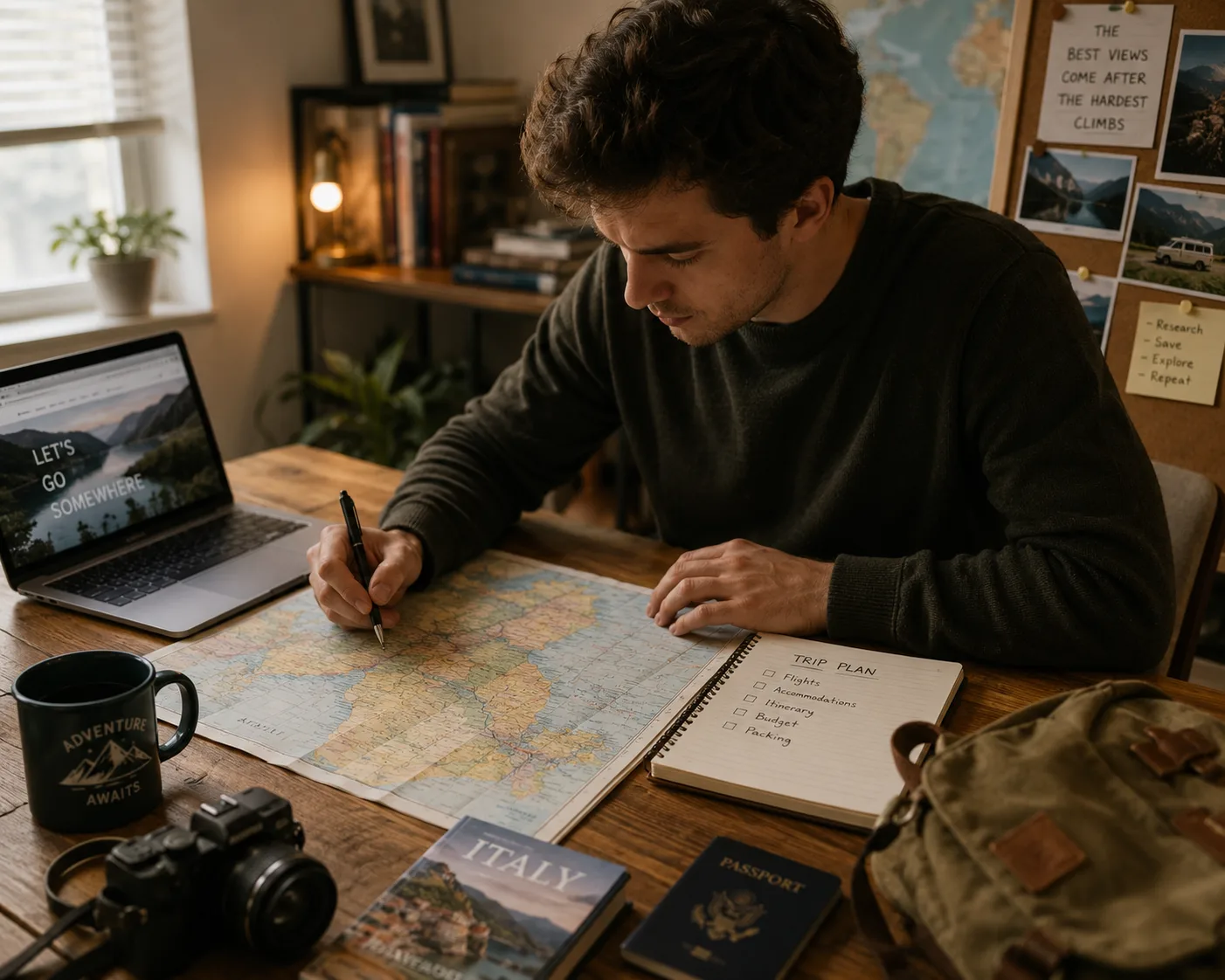
The single most important thing a solo traveler can do before departure is make sure someone, somewhere, knows what to do if they stop hearing from you. Every other preparation, the gear, the insurance, the itinerary, depends on that foundation being in place.
Why Solo Travel Demands a Different Kind of Preparation
Traveling with a group gives you a built-in safety net. Someone notices when you don't show up at the trailhead. Someone asks the front desk if your key has been used. Solo travel strips that away entirely. You are your own early-warning system — and that system needs a backup.
The numbers reinforce this. Solo travel has grown dramatically: [50% growth in solo international travel bookings over the past 5 years, source: travel industry report]. At the same time, leave home without a structured communication plan. That gap between enthusiasm and preparation is exactly where things go wrong.
We're not talking about fear. We're talking about the same logic that makes you pack a first-aid kit: you bring it hoping you'll never open it, but you'd never leave without it.
What a Real Pre-Trip Safety Plan Actually Looks Like
Most travelers think a safety plan means texting a friend their flight number. That's a start, but it's not a plan. A real pre-trip safety plan has four layers:
An itinerary on file: Dates, accommodations, transport legs, and emergency contacts for each destination, stored somewhere a trusted person can actually access it.
A check-in schedule: Specific times when you'll confirm you're okay, and a clear protocol for what your contact does if you miss one.
Prepared messages and instructions: Documents, account information, and personal notes that your people would need if you were suddenly unreachable for an extended period.
A fallback system: something that activates automatically if you go silent, without requiring your contact to guess whether to panic or wait.
Most travelers nail layer one. Fewer bother with layer two. Almost nobody has layers three and four — and those are the ones that matter most when life takes an unexpected turn.
How Should You Build Your Check-In Schedule?
The right cadence depends on your risk profile. A week in Copenhagen calls for something different than three months backpacking through remote Central Asia. Here's a framework we recommend:
Trip Type | Recommended Check-In Frequency | Fallback Window |
|---|---|---|
Urban travel, stable regions | Every 48–72 hours | 72 hours of silence triggers concern |
Remote hiking, wilderness | Every 24 hours or at trailhead/exit | 24 hours past planned exit triggers action |
Extended solo abroad (1+ month) | Weekly, with flexible daily option | 10 days of silence triggers formal escalation |
Motorcycle or adventure touring | Each riding day, at destination | 36 hours past expected arrival triggers concern |
The key word in that table is triggers. Your contact needs to know, in advance, exactly what action to take — not just that something might be wrong. That means writing it down before you leave.
Real Situations Where Preparation Made the Difference
Consider a solo hiker on a multi-day route in Patagonia. She'd left a detailed itinerary with her sister, including expected camp locations and a rule: if she missed two consecutive satellite messenger pings, call the park authority. On day four, a river crossing took longer than expected and she camped a full day behind schedule. Her sister, seeing the missed pings, made the call. Rangers found her safely — cold, slightly disoriented, but fine — because someone knew what to do and had the information to act on it.
Now consider the more common scenario: a traveler sends their flight details to a group chat and disappears into a three-week solo road trip through Southeast Asia. Their contacts see the message, assume no news is good news, and only start to worry two weeks after anything actually goes wrong. [STAT NEEDED — average delay between a traveler going missing and a formal missing persons report being filed, source: law enforcement or travel safety organization]. In many cases, that delay is measured in days, not hours.
The difference between those two stories isn't luck. It's architecture.
What Documents and Messages Should You Prepare Before Leaving?
This is where most travelers feel uncomfortable — not because it's hard, but because it asks them to think about being unreachable. We'd encourage you to reframe it: you're not preparing for the worst. You're giving the people you love a gift they'll hopefully never need to open.
Here's what belongs in a well-prepared solo traveler's message set:
Account access instructions — banking, email, subscriptions, and any automated payments that would need to be managed in your absence.
Insurance policy details — your travel insurance provider, policy number, and the claims process your contacts would follow on your behalf.
Medical information — blood type, allergies, current medications, primary physician, and any advance directives or preferences for care.
A personal letter — not a dramatic farewell, just a note that tells the people you love what they mean to you. You might find this is the most valuable thing you prepare, and the one most likely to be read and re-read regardless of circumstance.
Practical instructions — who waters your plants, who has your spare key, what happens to your pet, what your landlord's number is.
Tip: Prepare these materials as if you're briefing a capable, caring person who knows you well but doesn't know your logistical life. They shouldn't have to guess anything. The more specific you are, the more useful it becomes.
How LastReach Fits Into a Solo Traveler's Preparation Stack
LastReach is a proof-of-life messaging platform built for exactly this scenario. You prepare the messages that matter most — practical, personal, or both — and set a timeline. LastReach checks in with you periodically. As long as you respond, nothing is sent. If life takes an unexpected turn and you become unreachable, your messages go to the people you've designated, at the timing you've chosen.
It's the fourth layer of your safety plan — the fallback that runs quietly in the background while you focus entirely on your adventure.
For a solo traveler, this changes the shape of the experience in a subtle but meaningful way. You leave knowing that the people you love are covered. Your sister doesn't have to wonder whether your silence means you're deep in a canyon with no signal or whether something's wrong. The system handles the ambiguity so she doesn't have to carry it.
Practically, here's how a solo traveler might use LastReach before a three-month trip through South America:
Before departure, prepare a set of messages: one for a close friend with account access details, one for a family member with medical and insurance information, one personal letter for each person who matters most.
Set a check-in window appropriate to the trip — perhaps every 14 days — with a grace period that accounts for remote areas and spotty connectivity.
Travel. Check in when prompted. The system resets each time.
If something happens and check-ins stop, the messages reach the right people with the right information at the right time.
The entire setup takes less time than packing your bag.
What About Travel Insurance — Isn't That Enough?
Travel insurance is essential, and we'd never suggest skipping it. But insurance addresses financial and medical logistics. It doesn't call your mom. It doesn't tell your business partner where the contracts are. It doesn't deliver the message you'd want your children to have if you were suddenly unreachable for an extended period.
These are different tools for different needs. A comprehensive solo travel preparation stack includes both — and a few more things besides.
Five Overlooked Steps Solo Travelers Skip (and Shouldn't)
In our experience reviewing what well-prepared travelers actually do versus what most travelers do, five steps are consistently skipped:
Registering with your country's foreign affairs department. In the US, this is the Smart Traveler Enrollment Program (STEP). It's free, takes ten minutes, and means your embassy can contact you or your emergency contacts during a crisis.
Saving local emergency numbers for each country. 911 doesn't work everywhere. Download them before you need them.
Setting up a travel-specific email alias or shared document. Give your emergency contact access to a folder or draft email where your key documents live — insurance cards, passport photo, itinerary — without giving them access to your entire inbox.
Telling your bank where you're going. Simple, but a frozen card in a foreign country is a genuine safety risk, not just an inconvenience.
Writing down your prepared messages and setting up a fallback delivery system. This is the step that feels optional until it isn't.
The Mindset Shift That Makes All of this Easier
The travelers who prepare thoroughly aren't more fearful than those who don't. They're actually freer. When you know the foundation is solid — when you know your people have what they need if life takes an unexpected turn — you can stop carrying that low-level background anxiety and put your full attention on the experience in front of you.
You can take the unmarked trail. You can say yes to the boat trip with spotty cell service. You can be fully present in the market in Marrakech or the mountain village in Nepal, because you've already handled the logistics that would otherwise nag at you.
That's what preparation actually gives you: not safety from risk, but freedom within it.
A note on connectivity: Many popular adventure destinations have limited or unpredictable internet access. When choosing your check-in tools — including LastReach — factor in whether you'll reliably have the connectivity to respond. Build grace periods into your settings that account for multi-day gaps in remote areas.
Where Do You Start If You're Planning a Trip Right Now?
Start with the list, not the technology. Write down, on paper or in a document, the three people who would need to be reached if you were suddenly unreachable. Then write down what each of them would need to know. That exercise alone — which takes maybe twenty minutes — will show you exactly what you need to prepare and where the gaps are.
Then build backward from your departure date. Register with your embassy program. Confirm your insurance. Set up your check-in schedule with a trusted contact. Prepare your messages and put a fallback system in place. Pack your bag last — it's the easiest part.
The adventure is out there waiting for you. The only thing standing between you and it is an afternoon of preparation that you'll be glad you did, and that the people who love you will be even more glad for.
Sources
U.S. Department of State. "Smart Traveler Enrollment Program (STEP)." travel.state.gov. https://step.state.gov
https://www.newswise.com/pdf_docs/163309295234815_Missing%20Abroad%20Report%20final.pdf
https://www.bmt.com/news-insights-events/bryn-mawr-trust-survey/
Frequently asked questions
What should I do before a solo trip to make sure someone can reach my family if something happens?
File a detailed itinerary with a trusted contact, set a check-in schedule with clear escalation steps, prepare key documents (insurance, medical info, account access), and use a fallback messaging platform like LastReach so your people receive the right information even if you're unreachable.
How often should a solo traveler check in with someone back home?
It depends on your risk level. Urban travel: every 48–72 hours. Remote hiking: every 24 hours or at trailhead exit. Extended trips abroad: weekly minimum. Always agree in advance on what your contact should do if you miss a check-in.
Is travel insurance enough of a safety net for solo travelers?
Travel insurance handles financial and medical logistics, but it won't notify your family, share your account details, or deliver personal messages. It covers one layer of preparation — you need several others alongside it.
What is LastReach and how does it work for travelers?
LastReach is a proof-of-life messaging platform. You prepare messages in advance, set a check-in timeline, and respond periodically to confirm you're okay. If you stop responding, your messages are automatically delivered to the people you've chosen.
What documents should I prepare before a solo trip abroad?
Prepare your insurance policy details, medical information (blood type, medications, allergies), account access instructions, a copy of your passport, your itinerary, and a personal letter for close family or friends — stored somewhere a trusted person can access.
What is the Smart Traveler Enrollment Program and should I sign up?
STEP is a free US State Department program that registers your trip with the nearest embassy. It lets the government contact you or your emergency contacts during a crisis abroad. It takes about ten minutes and is strongly recommended for any international travel.

LastReach Team
The team behind LastReach — building tools that help people leave words behind for the people they love.
Start preparing your messages today
LastReach makes it simple to write important messages now and have them delivered to the right people, exactly when they need to arrive.
Get started — it's free